
Start with the last ordinary attempt.
Describe what happened when the door was used normally. Did it remain open, move a little or reverse during travel? Was there an indicator or a message? Keep the position and the control response separate so a failed command is not mistaken for a physical stop.
Do not keep cycling a struggling or damaged door to collect more details. If the door is crooked, displaced or unstable, leave it out of use and keep people clear. A door held open is not a safe place to stand beneath while troubleshooting.
Safety sensors are one possible part of the picture.
Chamberlain's product guidance explains that obstruction or alignment issues in its Protector System can affect closing. That does not make a sensor fault the answer to every closing problem, and it does not establish what another brand or model should display.
Use the actual product information and only observations available from a safe position. Do not bridge, disconnect or override a safety device to keep the door operating. A system that closes when it should detect an obstruction needs appropriate service, not a workaround.
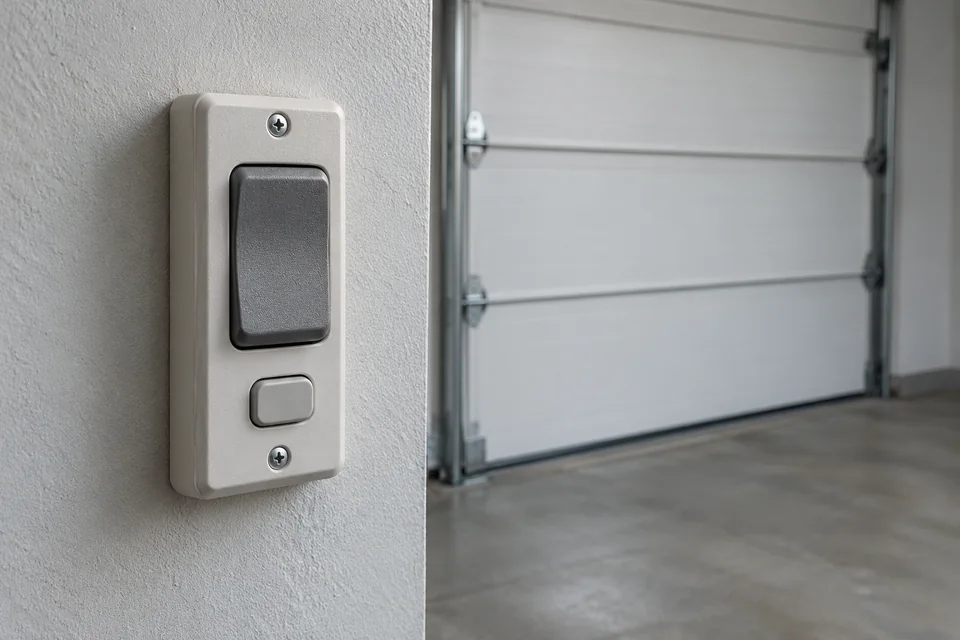
The wall control, remote and app can differ.
A command can come from more than one place. If you already noticed different behavior from the wall control and a remote, mention it. There is no need to repeat operation on a compromised door just to complete a checklist.
An app error adds information about that control path. It does not prove the door's physical parts are sound or that the motor needs replacement. Manufacturer guidance varies by product generation, including the meaning of flashes and other indicators.
Physical resistance needs its own assessment.
A door may reverse or stop because its movement is affected. The visible symptom does not establish which part is responsible. Springs, cables, tracks and related hardware should not be adjusted as a casual test.
Avoid increasing force or altering travel settings to defeat an unexplained fault. The purpose of a repair assessment is to establish the condition and the suitable work, not simply to make the door complete another cycle.
Turn the observation into a clear repair request.
Keep the door's current position, the last normal behavior, the control used and any safely available model information together. Include visible damage or a recent event without assuming it caused the fault.
For garage door repair in Placentia, ask what the assessment covers and how the proposed work relates to the condition found. A complete replacement, a new remote and a physical repair solve different problems. The recommendation should explain which problem it is addressing.
A little more clarity.
Can I hold a control to get around a sensor problem?
Do not use an override to keep operating a system with an unexplained safety or closing fault. Use appropriate product guidance and service.
Do the same flashing lights mean the same fault on every opener?
No. Meanings vary by model and generation. Identify the actual product before interpreting an indicator.