
Keep the message and movement separate.
An app may report a failed command while the door's actual position tells another part of the story. Describe the message and any ordinary control response already observed. Do not assume a connection error proves that the motor or spring has failed.
If the door is damaged, uneven or unstable, stop using it regardless of what the app displays. A successful connection is not a safety assessment of the physical system.
Use the correct model's information.
Manufacturers distinguish product generations and indicator meanings. A sequence found for another opener can be misleading. Keep the actual equipment information if it is safely available, and avoid resetting access arrangements as a guessed repair.
Our Irvine garage-door repairs separate connectivity and control faults from problems with the door's movement. We assess the relevant equipment and explain what the proposed work is intended to restore, without using a universal reset or safety override. The closing-symptom guide adds practical context.
Managed access may involve another decision maker.
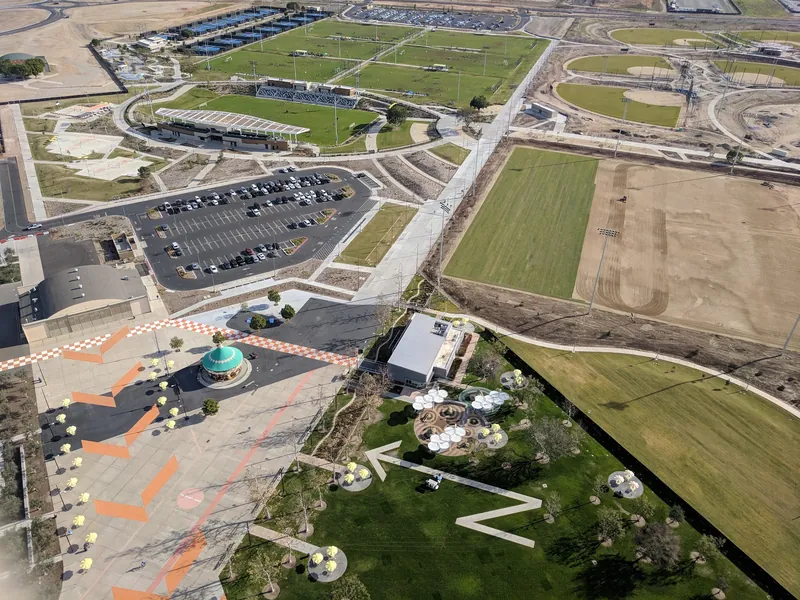
Irvine's Great Park map distinguishes roads and parking areas, but those geographic labels do not describe ownership of a nearby garage or account. A shared property may require its manager to control users and approve repairs.
Use the actual property and clarify the authority over both the physical equipment and any connected account. Ask for the proposed work to address the established fault while preserving any authorized arrangements that are outside its scope.
A little more clarity.
Does a myQ close error mean the opener needs replacing?
No. The message, model and physical behavior need to be assessed before choosing a repair or replacement.